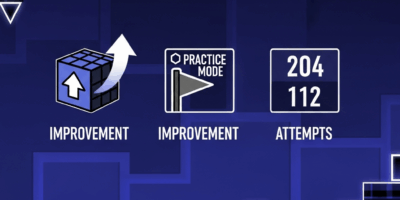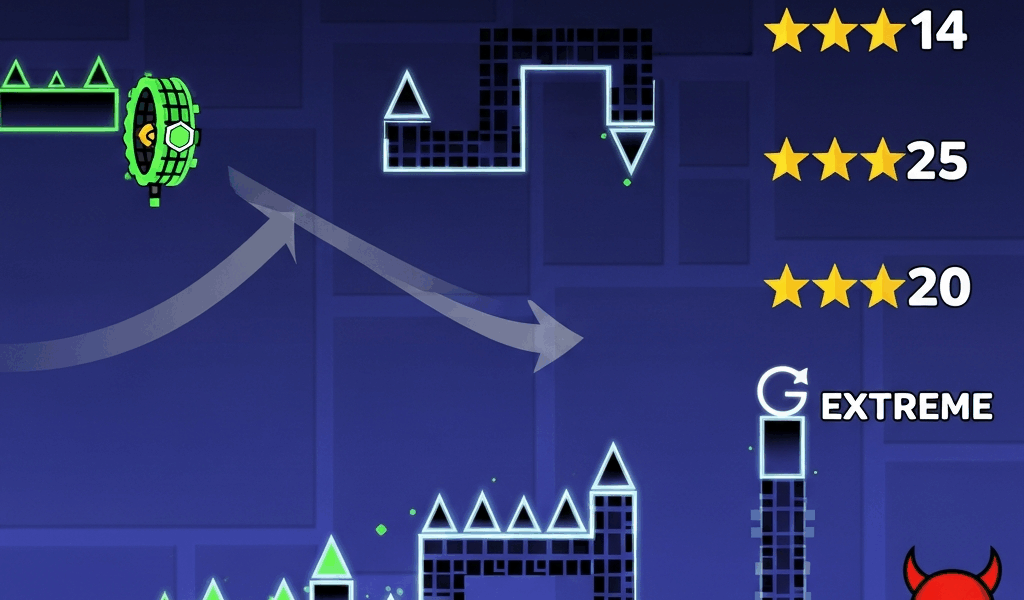
Completing your first extreme demon is a milestone that many Geometry Dash players dream about but few achieve. The journey from complete beginner to extreme demon conqueror is challenging but absolutely possible with the right approach. This guide provides a realistic six-month roadmap to reach this impressive goal.
Understanding the Challenge Ahead
What Makes Extreme Demons Different
Extreme demons represent the pinnacle of Geometry Dash difficulty. They require precise inputs, consistent execution, and mental endurance that far exceeds lower difficulty tiers. While completing an easy demon might take hours, extreme demons often require thousands of attempts over weeks or months.
Setting Realistic Expectations
Six months is an aggressive timeline for reaching extreme demon level. This plan assumes regular dedicated practice, often an hour or more daily. Some players may progress faster, others slower. What matters is consistent improvement rather than hitting arbitrary deadlines.
The Practice Mindset
Approach this journey as skill development rather than just playing for fun. Deliberate practice on challenging content produces faster improvement than grinding easy levels. You need to push beyond your comfort zone consistently.
Month One: Foundation Building
Week 1-2: Master the Basics
Complete all official levels through Clubstep. These levels teach fundamental mechanics that every skilled player needs. Focus on smooth execution rather than just completion. If you can barely scrape through, you have not truly mastered the content.
Practice each game mode in isolation. Find community practice levels for cube, ship, ball, UFO, wave, robot, and spider. Comfortable execution in all modes prevents any single weakness from holding you back later.
Week 3-4: First Demon Completions
Target three to five easy demon completions. The Nightmare, The Lightning Road, and Demon Mixed are traditional starting points. Do not spend too long on any single level. If progress stalls after reasonable attempts, move to another level and return later.
Start identifying your weak game modes. Track where you die most frequently. Focus extra practice on those areas rather than grinding modes you already handle well.
Month Two: Building Demon Skills
Week 1-2: Medium Demon Push
Progress to medium demon completions. Levels like B, Gold Temple, and Nine Circles at appropriate difficulty build skills for harder content. Aim for two to three medium demon completions during these weeks.
Introduce practice mode into your routine. Learn to break difficult sections into small pieces. Master each piece individually before attempting full runs. This technique becomes essential for extreme demons.
Week 3-4: Wave Practice Emphasis
Wave mode dominates extreme demon difficulty. Dedicate extra time to wave practice regardless of your current comfort level. Find wave-focused challenge levels. Practice tight corridors and speed variations.
Complete at least one medium demon featuring substantial wave content. This ensures you are not avoiding the mode that will matter most later.
Month Three: Hard Demon Territory
Week 1-2: First Hard Demons
Hard demons require noticeably more commitment than medium demons. Choose your first hard demon target carefully. Levels with fair difficulty distribution help more than those with single impossible sections.
Expect to spend significantly more attempts on hard demons than previous levels. This is normal progression. Do not be discouraged if your first hard demon takes 1000+ attempts.
Week 3-4: Multiple Hard Demons
Complete at least two hard demons during month three. Variety helps build adaptable skills. Choose levels with different primary game modes. One ship-focused and one wave-focused hard demon would be ideal.
Track your attempt counts. Compare them to community averages to understand your relative progress. Improving your attempts-to-completion ratio indicates skill growth even when raw progression feels slow.
Month Four: Entering Insane Territory
Week 1-2: Hard to Insane Transition
The jump from hard to insane demon is substantial. Some players find this the most difficult transition in the entire progression. Levels in the harder range of hard demons help bridge this gap.
Study how top players handle insane demon content. Watch verification videos and skilled players practice streams. Notice their consistency, timing, and mental approach to difficult sections.
Week 3-4: First Insane Demon
Choose an entry-level insane demon for your first completion. Cataclysm is a classic choice that teaches essential skills. Expect this to be your most challenging achievement yet.
Break the level into sections numbered by percentage. Track your progress through each section. Celebrate consistency improvements even before achieving the full completion.
Month Five: Solidifying Insane Demon Skills
Week 1-2: Multiple Insane Demon Completions
Complete two to three more insane demons to solidify your skills at this tier. Do not rush to extreme demons with only one insane completion. Consistent performance at insane level indicates readiness for the next step.
Focus on insane demons with different characteristics. Wave-heavy, ship-heavy, and mixed mode levels all contribute different skills to your repertoire.
Week 3-4: Top Insane Practice
Attempt insane demons near the top of the difficulty range. Even without completing them, practicing at this level builds the consistency needed for extreme demons. Get comfortable with the intensity you will face.
Refine your practice routine. Develop efficient ways to warm up, practice specific sections, and maintain focus during long sessions. Good practice habits multiply the value of time invested.
Month Six: The Extreme Push
Week 1-2: Choosing Your Target
Select an entry-level extreme demon as your goal. Acu, RUST, and Thanatophobia are popular first extreme demons with relatively fair difficulty distribution. Research completion rates and difficulty spikes before committing.
Watch completion videos multiple times. Memorize the level structure. Understand which sections will challenge you most based on your known weaknesses.
Week 3-4: The Completion Grind
Dedicate serious time to your chosen level. Practice mode sessions should dominate your playtime. Break the level into small sections and achieve consistency in each before attempting runs.
Set percentage goals. Aim for consistent 30% completion before seriously pursuing 50%. Build confidence through demonstrated ability rather than hoping for lucky runs.
Practice Techniques for Success
The 80% Rule
When practicing a section, do not move on until you can complete it roughly 80% of the time. Lower consistency wastes time on failed runs. Higher consistency demands diminishing returns. Find the efficient balance.
Run-Building Strategy
Once comfortable with sections individually, practice combinations. Can you do 0-30%? Then 30-60%? Then 60-100%? Then full runs? This progressive approach builds confidence and identifies weak transitions between sections.
Managing Tilt
Frustration destroys performance. When you notice declining consistency, take breaks. Pushing through tilt often makes things worse. Five focused hours across multiple sessions beats eight frustrated consecutive hours.
Physical Considerations
Hand position, grip, and posture affect performance. Find comfortable setups and maintain them consistently. Stretching prevents repetitive strain. Your body is part of your gaming equipment.
Mental Preparation
Accepting the Attempt Count
First extreme demon completions often require 5,000 to 20,000 attempts or more. This is normal. Do not compare yourself to skilled players who complete levels in fewer attempts. They have thousands of hours of experience you have not yet accumulated.
Progress Recognition
Track improvement beyond completion. New high scores, more consistent sections, and faster learning all indicate progress. Celebrate these milestones to maintain motivation through the long grind.
Dealing with Failed Runs
You will die at high percentages. Potentially multiple times at 90%+. This is devastating but normal. Each good run proves you can reach those percentages. Eventually, one run will go all the way. Trust the process.
Equipment Optimization
Input Device
Use whatever input method feels most comfortable. Some players prefer keyboard, others mouse, others mobile touch. What matters is consistency. Switching devices mid-progression wastes skill development.
Display Setup
Higher refresh rate monitors provide smoother gameplay. 144Hz or higher helps significantly at extreme difficulty. If upgrading is possible, prioritize refresh rate over resolution for Geometry Dash.
Frame Rate
Stable, high frame rates improve consistency. Close background applications. Ensure your system can maintain smooth performance throughout extended sessions.
Beyond the First Extreme
What Completion Opens Up
Your first extreme demon proves you can handle this difficulty tier. Subsequent extreme demons typically require fewer attempts as you apply learned skills. The hardest extreme demon completion is almost always your first.
Continuing Progression
The extreme demon tier has enormous internal variation. Entry-level extreme demons and top-list levels are worlds apart. You have essentially infinite room for continued improvement after your first completion.
Joining the Elite
Extreme demon completion places you among the most skilled Geometry Dash players. While top players make it look easy, you now understand the dedication required. Enjoy your achievement and continue pushing your limits.
Common Mistakes in Progression
Skipping Difficulty Tiers
Jumping straight to levels beyond your skill wastes time. The progression through difficulty tiers builds foundational skills. Players who skip steps often plateau because they lack basics that harder content assumes.
Avoiding Weak Modes
Ignoring your weakest game mode eventually catches up with you. Every extreme demon uses multiple modes. Force yourself to practice uncomfortable content early rather than hoping it will not matter.
Insufficient Practice Mode Usage
Grinding runs without section practice is inefficient. Practice mode exists for a reason. Use it extensively, especially as levels get harder.
Comparing to Others
Everyone progresses at different rates. Some players have gaming backgrounds that transfer to Geometry Dash. Others start completely fresh. Your only meaningful comparison is to your past self.
Conclusion
The journey from zero to extreme demon completion in six months is ambitious but achievable with dedication and smart practice. Follow the progression outline, adjust timelines to your personal progress rate, and maintain consistent effort.
Remember that this milestone represents just one point on an infinite skill continuum. Enjoy the process of improvement as much as the eventual achievement. The skills you develop serve you throughout your Geometry Dash journey.
When you finally see that completion screen on your first extreme demon, you will understand why thousands of players have pursued this challenge. The satisfaction of conquering what once seemed impossible makes every failed attempt worthwhile. Good luck, and may your attempts be consistent.
Related Articles
Continue reading:
Leave a Reply