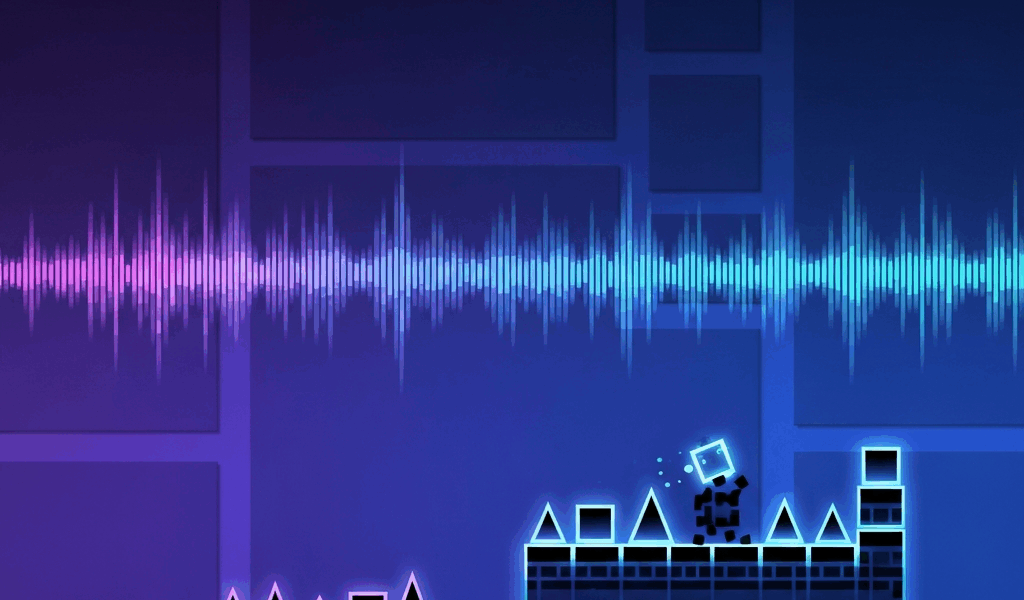
I died to the same Clubstep section 347 times before I figured out what was wrong. Not the level. Not my reflexes. My timing was off-beat by just enough to turn every jump into a coin flip. Sound familiar?
Music sync in Geometry Dash has gotten complicated with all the guides and “just feel the beat” advice flying around. As someone who went from failing easy demons to clearing insane demons in about six months, I learned everything there is to know about training your ear to match your inputs. Today, I will share it all with you.
Why This Matters More Than Reflexes
Here’s what nobody tells beginners. GD looks like a reaction game. It’s not. The best players aren’t reacting to obstacles as they appear — they’re predicting them based on what they hear. Big difference.
When you’re truly locked into the beat, the game feels almost automatic. Your fingers know what’s coming because your ears already told them. That flow state people talk about? It’s real, and it comes from internalizing the music-to-gameplay connection until your inputs become instinct.
Training Your Ear
Listen First. Seriously.
Before you throw yourself at a hard level, sit there and listen to the song. Don’t watch gameplay. Don’t read guides. Just listen.
Where do the drops hit? Where does the buildup create tension? Where do the transitions shift energy? These moments almost always line up with gameplay changes in well-built levels. Taking five minutes to understand the song structure can save you literal hours of frustrated attempts.
Probably should have led with this section, honestly. It’s the single most impactful thing I ever did for my gameplay.

Find the Beat Structure
Most GD songs have a clear, consistent beat. Before playing, tap the rhythm on your desk. Your leg. Whatever. That exact timing often matches when you need to jump or click.
Electronic music typically organizes into 4-beat or 8-beat phrases. Once you know where you are within a phrase, you can predict what’s coming next. I’m apparently someone who counts beats unconsciously now, and tapping along to every song works for me while trying to “feel it naturally” never clicked.
Sync Patterns Every Player Should Recognize
Experienced creators use predictable patterns. Learn these and half the game opens up:
- Bass drops — Mark the start of intense sections. More obstacles, faster pace. Brace yourself after every drop
- Hi-hats and snares — Usually mean rapid tapping or sequential obstacles. Listen for that rhythmic tick-tick-tick
- Melodic notes — Frequently match orb timings or key jumps. The melody literally sings the path through obstacles
- Silence or breakdowns — Hold position, wait for a timing, or prepare for a transition. Don’t rush through quiet parts
- Buildups — Gradually increasing difficulty or speed heading toward a climax. The music warns you every time
Practice Techniques That Actually Moved the Needle for Me
- Eyes-closed runs — For sections you’ve memorized visually, close your eyes for a few seconds and rely purely on audio. Terrifying the first time. Incredibly revealing
- Desk tapping — Watch someone else play while tapping the inputs on your desk. Builds rhythm without the pressure of actually playing. I did this during lunch breaks at work for weeks
- Build a simple level — Creating even a basic synced level teaches you how music maps to gameplay from the other side. Changed my whole perspective
- Slow-motion analysis — Watch recordings at half speed while listening carefully. You start noticing which specific sounds trigger which obstacles
Levels That Taught Me the Most
Some levels have sync so tight they actively train you while you play:
- Electroman Adventures — Clear beat matching throughout. Every input lines up with an obvious audio cue. Start here
- Fingerdash — RobTop went all-in on musical cues in this one. Ideal for learning how audio maps to gameplay
- Theory of Everything 2 — More complex, but the sync is so precise it teaches advanced timing through repetition
- Anything by Serponge — This creator is famous for impeccable music sync. Play any of their featured levels
Mistakes I Made (So You Don’t Have To)
I sabotaged my own progress for months by:
- Playing with the music too quiet — couldn’t hear the cues I needed
- Rushing through sections instead of feeling the rhythm
- Memorizing visual patterns while completely ignoring the audio
- Practicing only the hard parts without understanding the musical context around them
Turning my volume up and actually listening was the single biggest improvement I ever made. Dumb. Simple. Life-changing for my GD gameplay.
Once you feel the music instead of fighting it, Geometry Dash stops being a reflex test and becomes a dance. That’s the moment the game goes from frustrating to addictive, and it’s why millions of people keep coming back.
Related Articles
Continue reading:

Leave a Reply